
I met Emma Hutchinson in 2023 at Next Door Records in London. As we waited outside, we started chatting and that’s when I learned about all the work Emma was doing with children through music at her school. A year on, Emma has agreed to share her experience with us and I hope her words inspire you as much as they inspired me.
Stéphanie Becker
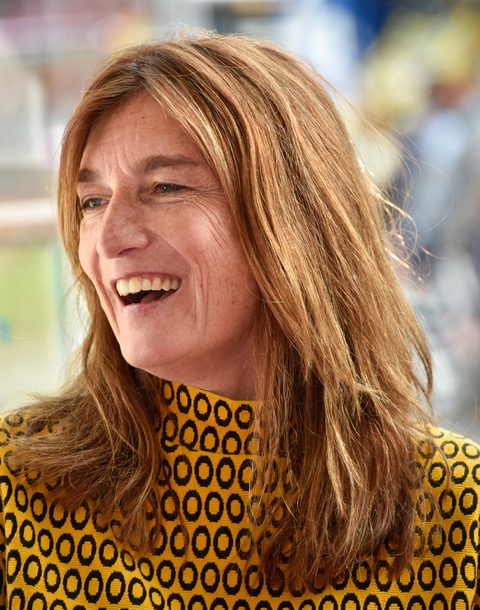 © Emma Hutchinson
Music House For Children was founded by Emma Hutchinson in 1994 to provide children from birth to 16 years with a range of early musical experiences from lessons to workshops and concerts, and to develop personal confidence, and a love of music. It became a non-profit in 1996 to broaden its’ reach and to gain funding to extend our work to include children with additional needs. In 2020, the organisation became a C.I.C*.
In 2001 she began a series of practical training courses to share accessible musical skills with the early years sector. She spent much of her time travelling to train nursery settings, childminder networks and language specialists. These courses are now available as online courses www.musichousecourses.com
* Community Interest Corporation
How many staff were there at the time of the opening compared with today?
Just 1 – me! I employed freelancers until 2002 when I employed a full time educator and bookkeeper. Now we have 3 full time staff and 60 freelance music educators.
What makes Music House for Children unique?
Our ability to be independent and make a difference to all ages without compromising its’ ethos. Our ability to be flexible, listen to our beneficiaries and to adjust existing, and develop new projects to meet the different needs. We retain and practice our core belief that music provides learning, communicative and life skills as long as we keep working collaboratively, and listening to our children.
 © Doris Heinrich
Do you have a success story or project to share?
Many. Five stand out:
a/ Adam was 3 when he started with us and was non-speaking*. Earlier this month Adam stood on the stage and recited his own 7 verse poem about the impact that music had on his life.
b/ Robbie is profoundly autistic and non-verbal. After regular music sessions Robbie sang in perfect pitch to the notes he played on a glockenspiel.
c/ During an 8 week research project 7 out of 8 non-verbal children sang or spontaneously spoke during the weekly music sessions.
d/ Observing many hundreds of parents’ genuine sense of wonder at what their babies can achieve through musical play.
e/ Students with EHCP (Education, Health & Care Plan) – a range of additional needs – presenting and performing on the stage.
*Nonspeaking autism refers to autistic people who cannot speak or can only say a few words. Nonverbal refers to autistic people who cannot vocalise words at all. (Source:https://www.medicalnewstoday.com/articles/non-verbal-autism#what-is-it)
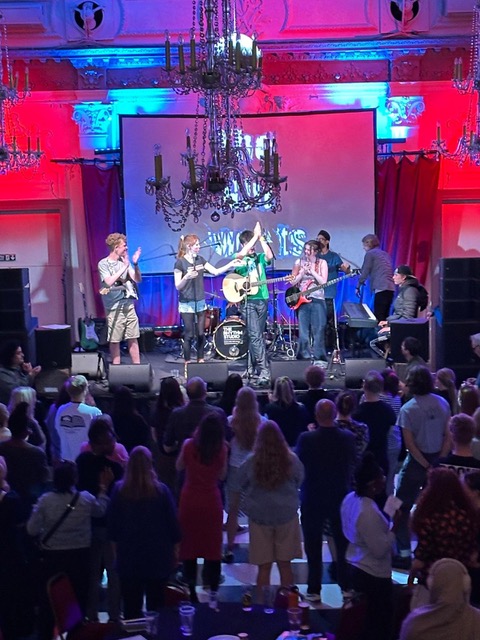 © Doris Heinrich
What do you think are the benefits of music for children?
Music gives children their unique voice. Music provides babies with the chance to experience, investigate, learn, vocalise and be spontaneous. Musical adventures develop personal characteristics and creative bravery. Young children gain leadership and collaborative skills and learn to listen. Music fine-tunes audio focus and sound discrimination. Finally, music empowers young children to become independent agents of change.
How is Music House for Children different today from when you started in 1994?
Its ethos of providing musical opportunities from lessons to performances whilst acknowledging and taking initiative from children as creative individuals has not changed. Our provision has expanded to include musical storytelling workshops, research projects, instrumental and music resources, and online training courses to provide professionals with requisite musical skills to support very young children’s early development and communication. We also provide music vocational courses for students to build their communication and the confidence to consider a career of choice.
Is Music House for Children the first (or only) company you’ve run?
No! Now you have pulled up memories here:
In 1986-8 I joined a Commedia dell’arte company called Unfortunati. We travelled around Holland and the UK performing multi-sensory, gestural theatre. Our shows developed stories of human endeavour through improvisation. I loved the travel, the unpredictability and working with the different social groups.
In 1989 my first solo business was selling sandwiches in Hong Kong with an 8 year old daughter of a friend of mine!
In 1991 I created Paint and Finishes, a painting and decorating business in the UK. I learnt how to create special paint finishes as I went along. As a musician, all of these madcap businesses were created to keep the wolf from the door.
I established Little Birdsong, a business selling music resources. Over time this morphed into musical story-tales and concerts for babies.
Now in addition to Music House for Children (1994) I have Music House Resources, a business selling musical resources for pre-school ages and Music House Courses (www.musichousecourses.com) providing online training courses for professionals, childminders and educators wanting musical skills to nurture early development through musical play.
What motivates your work?
Despite deafness from an early age I secured a full grant to Chethams School of Music. I later studied dance and theatre. Both provided me with a multitude of skills that enabled me to grab life with everything I had – communication, self-belief, creative thinking, listening, never saying no and taking failure as just another challenge to leap over. This was my ingrained reason and belief that music works for so many, as it worked for me. My lasting vision is to make a difference to every child’s early development and communication through music and the arts.
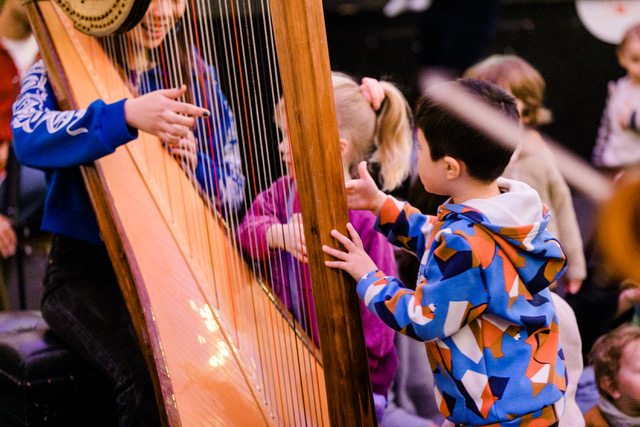 © Doris Heinrich
What challenges did you face when you set up the school?
Lack of finance to sustain overheads. Lack of belief by educational institutions that music should be embedded in education. Lack of consistency by freelance teachers. Lack of core financial support. Constantly justifying our charitable worth as a non-profit organisation that is neither statutory nor corporate.
What changes have you made to your business strategy in recent years?
Learn to delegate. Let go of things that do not work. Go with your gut instinct. Remain fresh, updated and relevant.
What’s your typical day like?
Every day is different and often unpredictable as like many, I juggle home with work. When I work from home I try to swim first thing. I feed the dogs and (pet) pigs. I then practice (piano and trumpet), before responding to emails. Then I undertake a mix including: instrumental recording and writing (songs), online meetings, writing articles, planning curriculum content and up-and-coming events; developing new initiatives and projects, put in a new funding application, have more meetings, devise promotional content, edit i-movies and audio content. I might have a moment to deal with family things, before continuing onwards, often ending my working day at around 7pm. When in London I am usually up by 7am, and in the office, having meetings and managing or developing initiatives, having more meetings, writing articles, funding applications and educational content, finishing often by about 9pm with lots of rushing about in between. 4 flights of stairs is far more interesting than the gym.
How would you describe the success of your school so far?
Thirty years on my school now has a robust framework with an extensive archive of content. The success has been entirely based on the commitment and educational passion of my amazing full time and freelance team. This makes me determined to see that Music House for Children can continue onwards and upwards by extending our reach through the successful models we have created, thereby supporting and collaborating with global communities and educators.
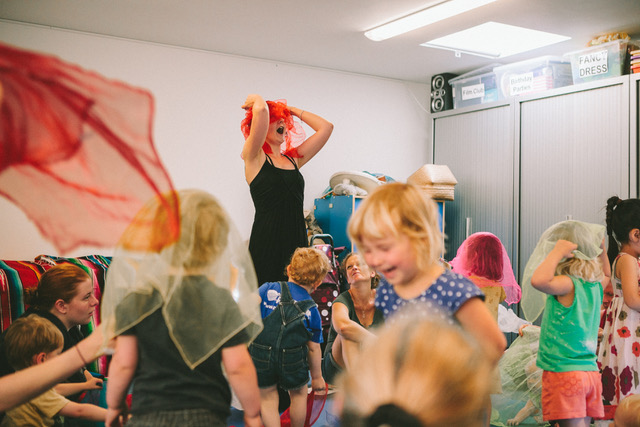 © Doris Heinrich
What advice would you give to someone who has just set up their cultural project?
- Listen to yourself first and foremost.
- If you have a good cultural business idea it is absolutely CRUCIAL that you have an understanding of all areas of starting a business including financials. Ultimately you can delegate key areas and remain in charge.
- Out of sight, out of mind – stay constantly present whether online or in the flesh.
- Know when to let go.
- Collaborate and trust.
- Know your target market. Know your target audience
- You can be everything!
The best advice I was given : I asked someone what I should do as I was juggling so many balls. He said “Carry on”.
My professional mantra:
Silence is the master of musical thought. Let your children speak.
Photo Credit: Doris Heinrich dorisheinrich.com and weheartpictures.com
Visit Emma Hutchinson’s website musichouseforchildren.com
Emma Hutchinson’s research papers :
independent.academia.edu/EmmaHutchinson
bcu.academia.edu/EmmaHutchinson
www.musichouseforchildren.com/research
Check the online training provided by Emma Hutchinson elsa-france.org (ELSA-FRANCE colleagues can access all courses by contacting Emma Hutchinson directly)